


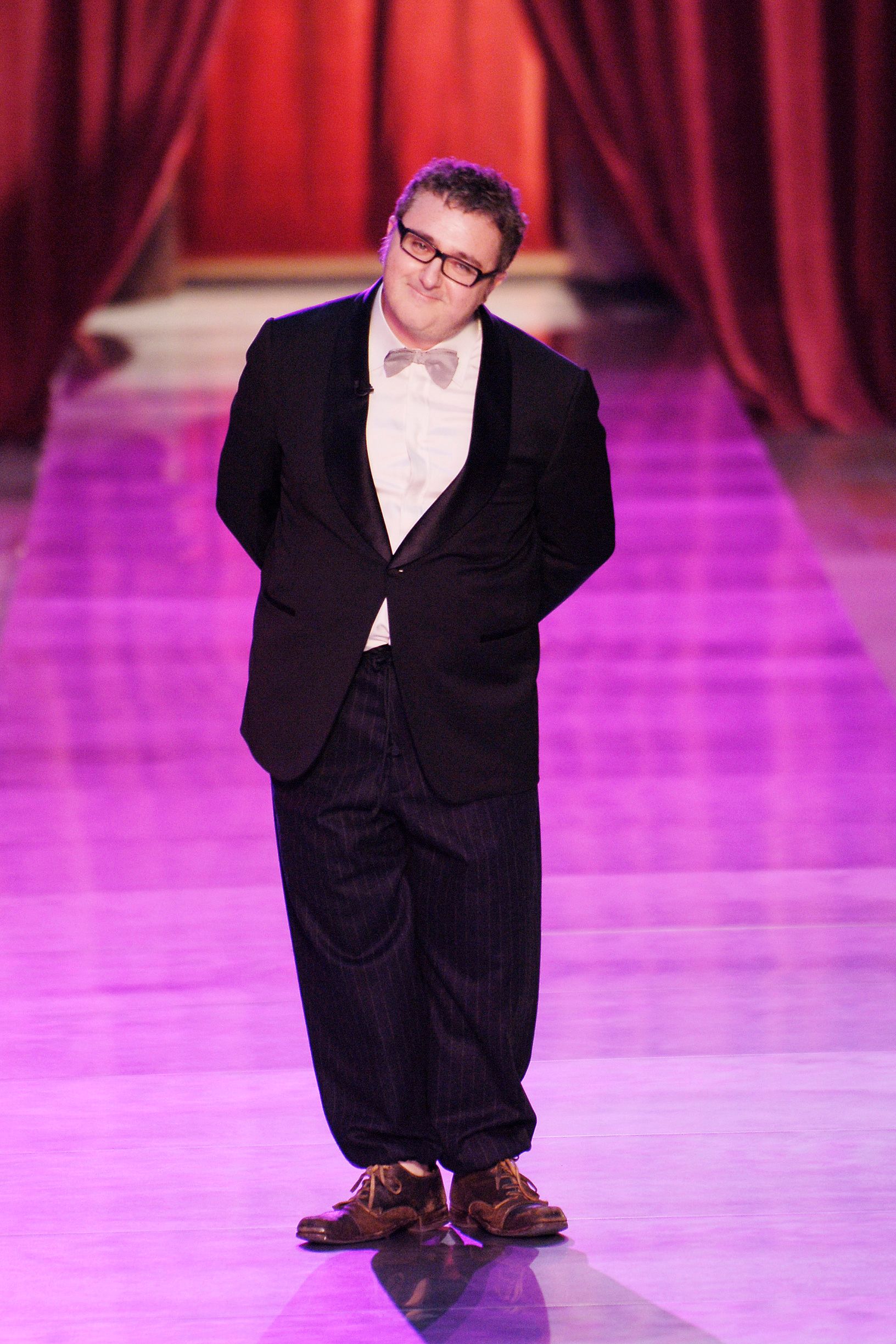
This is a good day to wish that the world was a little bit more Alber Elbaz.
More full, that is, of the joie de vivre, wit, intuition, empathy, and spontaneous flair that Elbaz brought to fashion. The kind of thinking he applied to how women are living. The discussion behind it. How he just wanted to make complicated things easy and delightful.
It’s five years today since Elbaz tragically died of Covid 19 in the American Hospital in Paris. Half a decade is a long time, but the relevance of his approach is still on point for now. His clothes are still alive in closets, being worn as favorite fail-safes for evening. They’re in museums and archives, and being purloined by daughters and granddaughters.

Lanvin, fall 2002 ready-to-wear
Antoine de Parseval
Daniel Roseberry was remembering Alber’s qualities backstage in conversation with Nicole Phelps before the Schiaparelli ready-to-wear show in March. He was thinking about the impression he made on him in the Noughties: “His love of women was so storied,” he said. Alber’s sculptural single seam dresses had leapt into Roseberry’s mind as he was designing that collection. But more generally, it was the attention and the skill that flowed from Alber’s studio and the atelier and onto the Lanvin runway during the 14 years he spent at the house.

Lanvin, fall 2004 ready-to-wear
Marcio Madeira

Lanvin, fall 2004 ready-to-wear
Marcio Madeira
All those shows are documented on Vogue Runway, looking as fresh and wearable as they did back then. Alber did drama and color, but also conjured a dark sexiness—I remember trying to capture the sensation we all felt in words: the “luster and rawness” of his early 2002 collection. His “beautiful compromise between the fierce and the feminine.” All the signature techniques he invented that went straight into our personal dressing repertoires. The abstract diamanté patches he backed on fabric and turned into necklaces. The pearls he covered in black tulle. The flyaway ribbons that undid the stuffy formality of dressed-up evening.

Lanvin, spring 2005 ready-to-wear
Marcio Madeira

Lanvin, spring 2005 ready-to-wear
Marcio Madeira
Most of all, though, there was his conversation about fashion that sticks in my memory, and which stands as an example I try to tell young designers about today. Some of the most treasured Alber moments that journalists and buyers enjoyed were the times he gathered us together in small groups and did show-and-tells for us with a few models in a room he hired at the Hotel Crillon.
Alber was the opposite of pretentious. He’d talk about his respect for the women workers in his atelier, about designing through watching women go about our daily lives, our struggles with the demands of jobs and families and how he wanted to make all of us feel love for our bodies and celebrate who we are. He’d joke and make us laugh.

Lanvin, spring 2011 ready-to-wear
Photo: Yannis Vlamos / GoRunway.com

Lanvin, fall 2013 ready-to-wear
Photo: Marcus Tondo / InDigital | GoRunway
These are very different times, but that way of presenting in a simple, human, off-runway manner, at low cost (it doesn’t have to be a fancy hotel room!) is the kind of communication that feels real and valid in an era when big fashion productions are often so distanced and impersonal. That’s one part of Alber’s legacy the next generation can take heart from today.
Another is the AZ Academy for aspiring independent designers, which was set up to honor his memory by the Richemont Group in Milan. (AZ Factory, named for the first and last letters in his name, was Alber’s last stop before he died). Described “as a living tribute to the late Alber Elbaz and a practical tool to build ‘smart fashion,’” the executive program offers scholarships in fashion and business to emerging designers to take their companies to the next level. Full disclosure, I am amongst the panelists who will select the coming year’s cohort. Applications close on May 20.

AZ Factory, spring 2021 ready-to-wear
Photo: Courtesy of AZ Factory
