


Joey Ingelhart/Getty Images
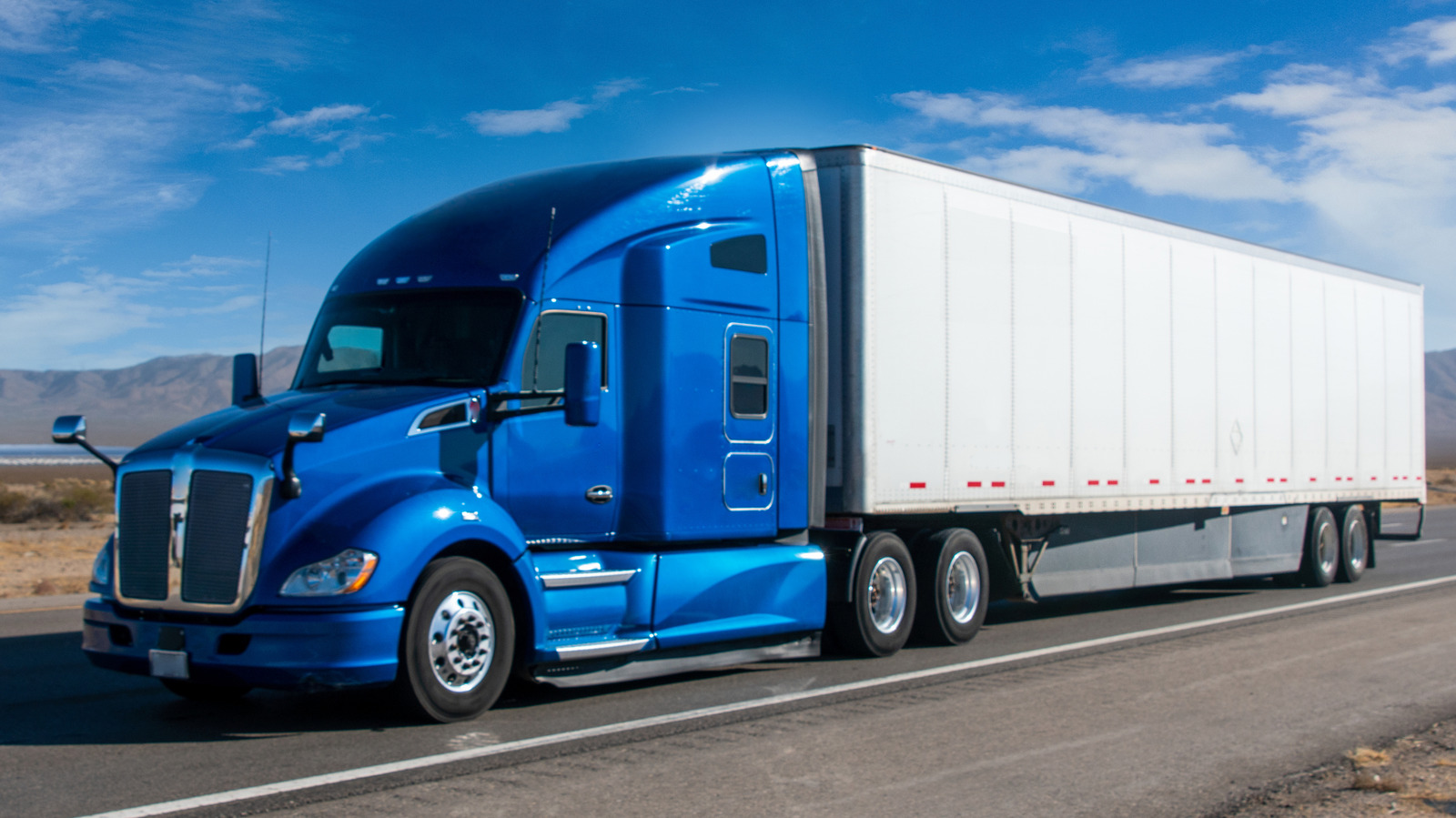
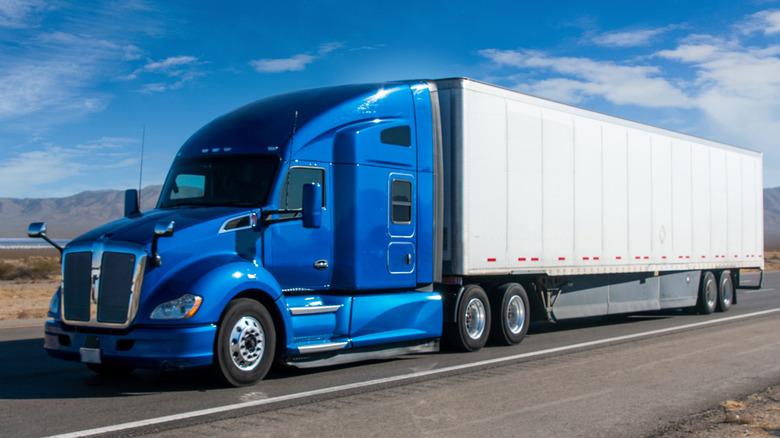
Next time you see a semi truck on the road, take a moment to appreciate that NASA had a hand in developing its design. In 1973, aerospace engineer Edwin J. Saltzman was biking to work at NASA’s Dryden Flight Research Center when he came to a realization about the semi trucks of the time. Saltzman noticed that the aerodynamics of passing trucks would push him and his bicycle toward the shoulder of the road before the wake then pulled him back in.
For an engineer who intimately understood aerodynamics, these close calls were a clear indication that the trucks were inefficiently fighting airflow. Saltzman wanted to mitigate the “bow wave” created by semi trucks in motion and help them “glide” down the road instead. This would reduce drag, boost fuel efficiency, and perhaps contribute to cyclist and motorcyclist safety. Luckily, Saltzman had the means to start solving the semi truck aerodynamics problem right there at his lab.
His colleagues were already studying the effects of drag and wind resistance on various aircraft and space shuttles; research that was mostly applicable when designing new semi trucks. The result of the experiments at Dryden was a boat tail trailer. While many trailer manufacturers deemed the boat tail to be impractical for loading and unloading, the research proved that an aerodynamic design could translate to thousands of gallons of fuel savings per year.
How NASA engineers made semi trucks more aerodynamic
Scientists have a different way of approaching everyday situations, and it’s these types of rational thinkers who are addressing big issues like solving the plastic ocean pollution problem today. In the case of Saltzman and his colleagues at NASA, they turned a mundane realization about semi trucks into a campaign that changed the automotive manufacturing industry. It all started with an experiment that showed rounding the front edges of a vehicle was enough to reduce drag by 52%. From there, it was a matter of pushing that reduction as far as possible.
The team at Dryden made a number of improvements that enhanced aerodynamics. They sealed the bottom of the test vehicle, rounded vertical corners, decreased internal volume, closed the gap between the cab and trailer, and ultimately added the boat tail. A separate team at Langley Research Center later conducted their own research on the subject, culminating in the use of “airtabs” to control and separate the flow of air around the vehicle.
The Dryden Flight Research Center, where Saltzman developed those innovative truck designs, is now known as the Armstrong Flight Research Center. That same facility recently played host to NASA’s X-59 supersonic jet breaking the sound barrier without producing an ear-splitting “sonic boom.” This is a big step toward new possibilities in commercial flight, proving that NASA engineering is still impacting the world around us wherever we look.
